Inspecting the electrical panel: what to look for
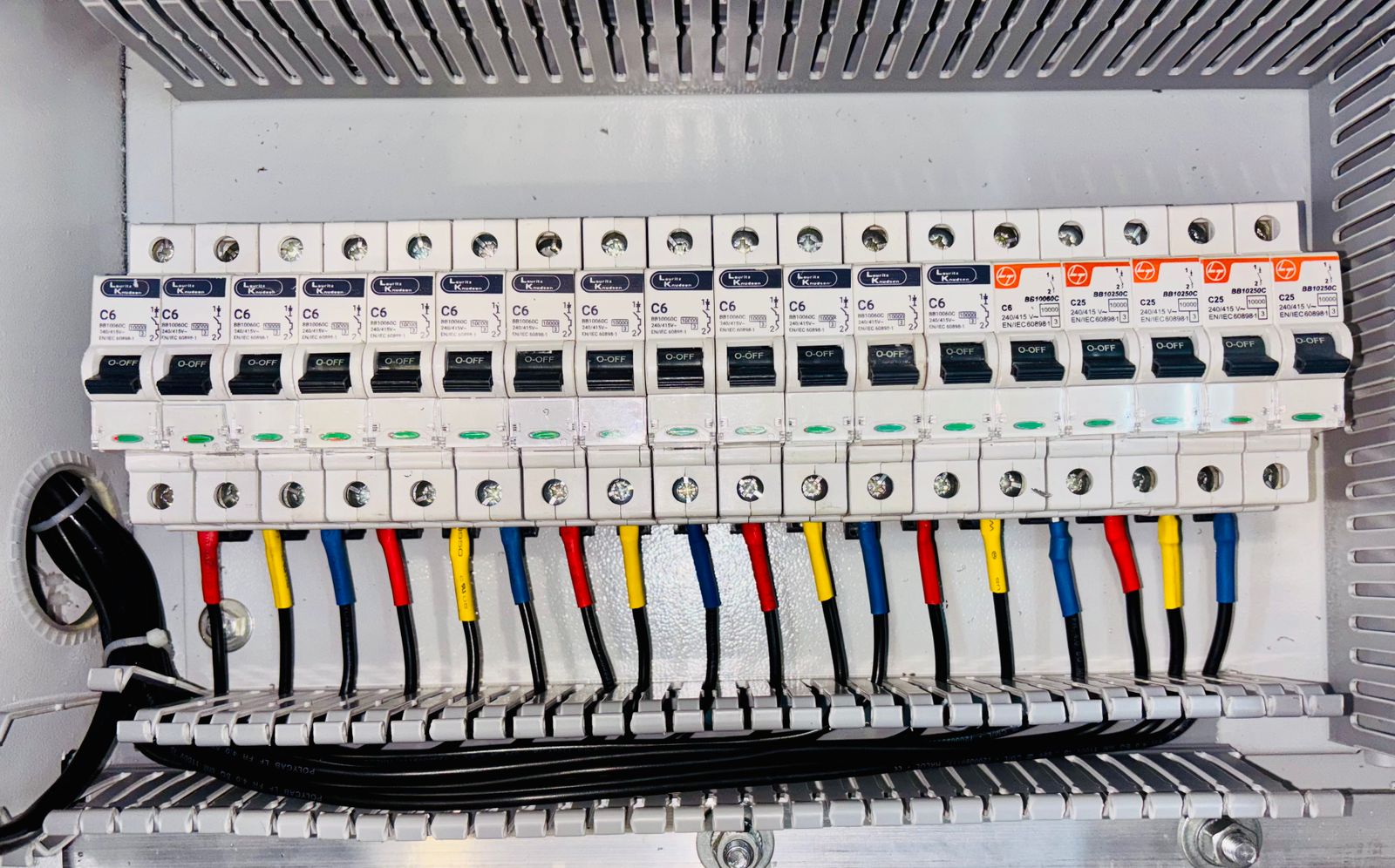
When you inspect an electrical panel, you look at the service entrance, the panel's location and condition, the breakers or fuses, the conductors inside, and the grounding and bonding, and you report anything that looks unsafe, damaged or improperly installed. You are not testing the system's capacity, calculating loads or certifying it to code. Anything that suggests a hazard gets a clear recommendation for evaluation and repair by a licensed electrician.
This guide covers the exterior service, the panel itself and the most common findings, in roughly the order you will meet them on site. Check your state's rules and your standard of practice, such as the InterNACHI Standards of Practice, for exactly what you must and must not do at the panel.
Start outside: the service entrance
Before you open anything, look at how power reaches the house.
Overhead service
- Service drop clearance over walkways, driveways, decks and roofs looks adequate, with no tree limbs in contact
- Mast is straight, secure and not pulling away from the roof or wall
- Weatherhead is intact, and the conductors form a drip loop below it
- Service entrance cable sheathing is intact, not cracked or frayed, and is secured to the wall
- Meter base is secure, sealed and not rusted through
Underground service
- Conduit or cable at the meter is intact and protected where it leaves the ground
- No erosion or settlement exposing the conductors
- Meter base secure, with no gaps where water can enter
The utility usually owns the service drop and the meter. You can report a concern about them, and the recommendation is often to contact the utility rather than an electrician.
Panel location and working space
The location itself can be a finding.
- The panel is readily accessible, not blocked by shelving, appliances or stored items
- There is clear working space in front of it, as local codes require
- It is not in a location where panels are commonly not allowed, such as a clothes closet or a bathroom
- It is not exposed to water: watch for panels below plumbing, under a leaking window or on a damp basement wall
- Exterior panels have intact covers and are rated for outdoor use
Codes set specific clearance and location rules and they change over time. You do not need to quote the code. Describe what you saw and recommend an electrician evaluate it.
Removing the dead front safely
Most standards of practice expect you to remove the panel cover when it is safe to do so. You also have the right to leave it on when it is not. Your safety comes first, and "the cover was not removed because..." is a legitimate limitation.
Before you touch it
- Look for scorching, melting, rust, water staining or a hot smell
- Check the floor: stand on a dry surface, never in water
- Listen for buzzing or crackling
- Check that the cover is not energized: some inspectors use a non-contact voltage tester on the cover first
- Wear the personal protective equipment you have been trained to use, such as insulated gloves and safety glasses
Leave the cover on if
- The panel is wet, heavily corroded or shows signs of arcing
- The cover screws are painted over, stripped or the cover is stuck
- The space in front of the panel is unsafe to stand in
- The cover is wallpapered or built into finishes so that removing it would cause damage
While it is off
- Stand to the side of the panel, not directly in front of it
- Never insert tools, fingers or a probe into the panel
- Note whether the original cover screws were blunt-tipped. Pointed sheet-metal screws can pierce conductors inside the panel, which is a common finding
- Replace every screw before you leave, and confirm the cover sits flat
Most standards do not require you to operate breakers or the main disconnect, and many inspectors choose not to. If you do not, there is no need to explain at length; your standard covers it.
What to look for inside the panel
Work methodically: service conductors, main disconnect, bus and breakers, branch conductors, then neutrals and grounds.
Service size
Estimate the service size from the main breaker or fuse rating and the size of the service entrance conductors. Report it as an estimate. If the main breaker rating seems higher than the conductors appear to support, recommend an electrician evaluate it. You are not doing a load calculation.
Breakers and fuses
- Breakers that look scorched, melted, cracked or loose on the bus
- Breakers that do not appear to be the type the panel is listed for (mixing brands is a common finding)
- Double-tapped breakers: two conductors under a single terminal that is not designed for two
- Breaker size that appears too large for the wire it protects
- Missing knockouts or open breaker slots that leave live parts exposed
- In fuse panels, fuses that appear oversized for the circuit and adapters that look tampered with or missing
Branch circuit conductors
- Signs of overheating: discolored insulation, melted sheathing, browned terminals
- Aluminum branch circuit wiring, especially solid conductors on 15 and 20 amp circuits
- Conductors without proper clamps or bushings where they enter the panel
- Sheathing stripped back too far, or not entering the panel at all
- Taps and splices inside the panel where they do not belong
On aluminum branch wiring, the Consumer Product Safety Commission's guide Repairing Aluminum Wiring explains why connections are the concern and which repairs it recommends. You do not need to explain the chemistry in your report. Name what you saw and recommend a licensed electrician who is familiar with aluminum wiring evaluate the system.
Neutrals, grounds and bonding
- Main panel: a grounding electrode conductor is visible and connected, with the main bonding jumper or screw in place where it should be
- Subpanels: neutrals and equipment grounds appear to be on separate bars, with the neutral bar not bonded to the enclosure
- Multiple neutral conductors under a single terminal screw
- Grounding electrode connection at the rod or water pipe, where visible
Bonding questions are easy to get wrong. If something looks off, describe it ("neutral and ground conductors share the same bar in this subpanel") and recommend an electrician evaluate it, rather than stating that the panel is "not grounded."
Labeling and protection devices
- Circuit directory missing, incomplete or illegible
- Presence of arc-fault (AFCI) and ground-fault (GFCI) breakers, and whether test buttons respond if you choose to test them
Requirements for AFCI and GFCI protection depend on when the home was built and local codes. In an older home, the absence of either is usually a recommendation to consider an upgrade for safety, not a defect.
Panels and conditions that call for an electrician
| Observation | Why it matters | Typical recommendation |
|---|---|---|
| Scorching, melting or burnt smell | Possible overheating or arcing | Licensed electrician evaluate promptly |
| Double-tapped breaker | Loose connection, overheating | Electrician evaluate and correct |
| Breaker apparently oversized for wire | Wire may not be protected from overload | Electrician evaluate |
| Open slots or missing knockouts | Exposed live parts | Electrician install proper fillers |
| Water staining or rust in the panel | Corrosion, failure of components | Electrician evaluate, identify water source |
| Aluminum branch wiring | Connection concerns described by CPSC | Electrician familiar with aluminum wiring evaluate |
| Panel brands with known concerns | Reports of breakers that may not trip as expected | Electrician evaluate |
Certain older panels, including Federal Pacific Electric panels with Stab-Lok breakers and some Zinsco panels, are widely flagged in the inspection industry for further evaluation. Keep the wording factual: identify the panel, state that this type is commonly recommended for evaluation, and refer it to an electrician. Do not tell the client it will fail or that it must be replaced.
How to word electrical panel findings
Use the observation, implication and recommendation pattern, and choose the severity honestly. Severity levels covers how to decide.
Double tap
Two conductors are connected to a single breaker terminal at the 20 amp breaker in the third position on the left. This breaker does not appear to be designed for two conductors. This can cause a loose connection and overheating. Recommend a licensed electrician evaluate and correct.
Signs of overheating
Discolored insulation and a scorched terminal were observed at a breaker in the main panel. These are signs of overheating, which is a potential fire hazard. Recommend a licensed electrician evaluate and repair promptly.
Limitation
The panel cover was not removed because the cover screws were painted over and could not be removed without damage. The interior of the panel was not inspected. Recommend a licensed electrician inspect the panel interior.
Photos and documentation
- Wide shot of the panel and its surroundings, including anything blocking access
- Panel label, if legible, with the manufacturer and model
- Interior photo with the cover off, plus close-ups of each defect
- The service entrance and meter from outside
A clear photo helps the electrician who follows you and protects you if the client later disputes what was there. Documenting conditions on inspection day goes further on that point.
Keep it consistent across inspections
Electrical findings repeat. Saving tested wording for double taps, open slots, aluminum wiring and missing labels means every client gets the same clear explanation. iSpector inspection reports let you build a template with your own sections, items and severity levels, and save reusable comments to a comment library you can drop in from the field.
Key takeaways
- Inspect the service entrance before the panel, and refer utility-owned parts to the utility.
- Remove the dead front only when it is safe, and report it as a limitation when it is not.
- Look for overheating, double taps, apparent oversizing, open slots, aluminum branch wiring and bonding problems.
- Describe what you saw instead of diagnosing, and refer electrical hazards to a licensed electrician.
- Photograph the panel inside and out so the electrician and the client see what you saw.